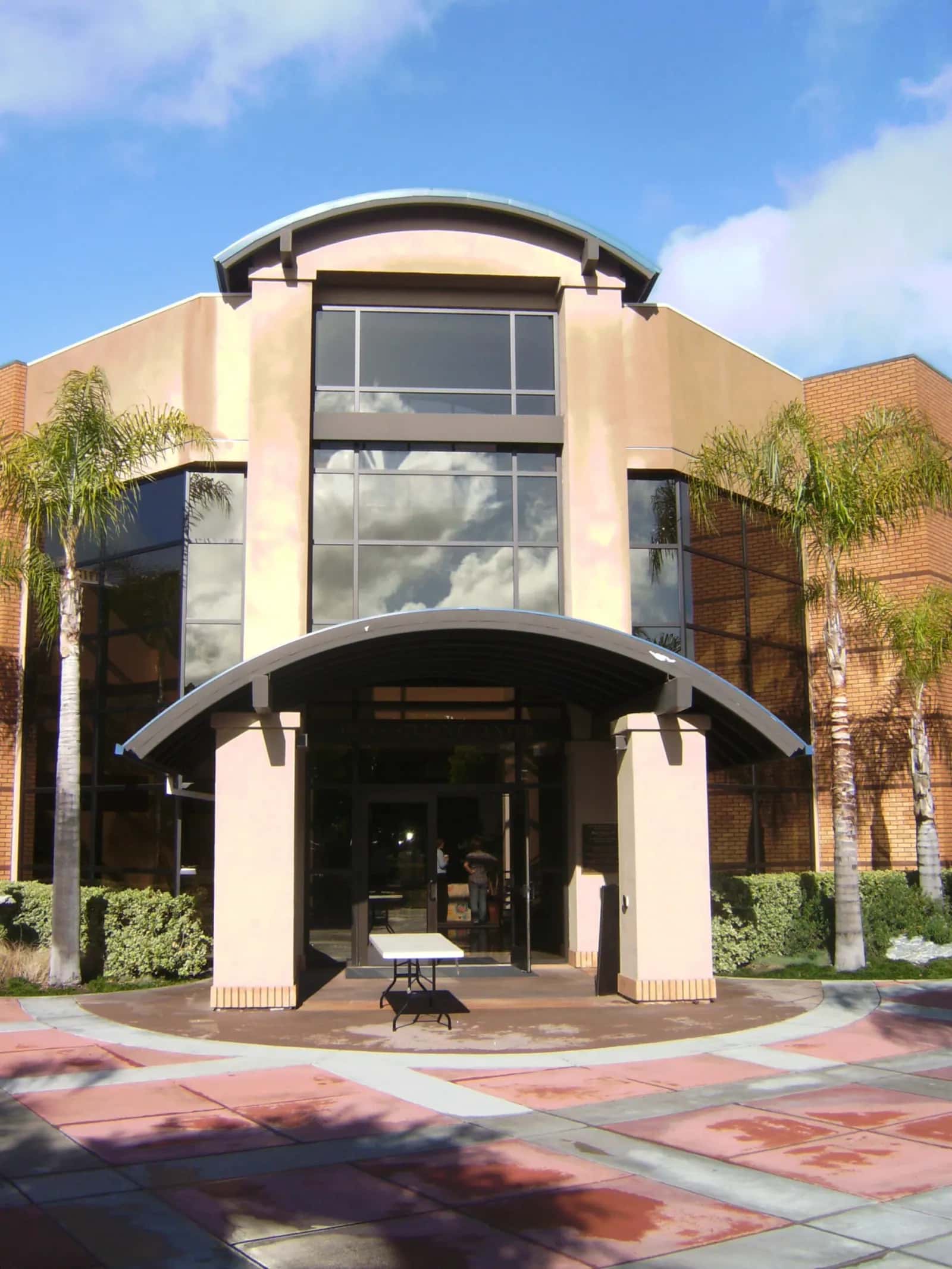

Life Pacific University acceptance rate
Life Pacific University accepts 95.8% of applicants (latest data). Admissions details
What we know
Verified data· U.S. College Scorecard · latest data- Students
- 456
Smaller than 63% of colleges
National median 891
Religious affiliation: Other Protestant(U.S. College Scorecard · latest data)
What the numbers say about Life Pacific University
Each finding compares this college's federal figures with other colleges. Your own price and outcome will differ.
- Price against similar colleges
- The average net price of $26,892 a year is $1,532 above the median of $25,360 across 88 private nonprofit colleges in California.
- Price by family income
- Families earning up to $30,000 paid $25,821 a year after grants, and families earning over $110,000 paid $31,219, a difference of $5,398: the lowest-income families paid 83% of the top bracket's price.
- Debt against earnings
- Graduates who borrowed left with a median of $21,500 in federal loans, 49% of the $43,561 median salary of former students ten years after they started. On a standard 10-year plan that is about $244 a month, 7% of a typical monthly salary.
- Graduation against selectivity
- It admits 96% of applicants, and 49% of first-time, full-time students graduate within 150% of normal time. Colleges admitting 75–100% of applicants have a median graduation rate of 55%, so it graduates fewer students than its selectivity alone would suggest.




Admissions
Admit rate
Less selective than 85% of colleges
National median 78.1% across 1,958 colleges
Your chances
Check your chancesYour SAT or ACT against Life Pacific UniversityApplication deadline timelineDates and updates
Get reminders before the FAFSA opens and before the usual early, Regular Decision and May 1 dates, plus an email when we update Life Pacific University's cost, admission or outcome figures.
We don't list this college's own deadlines; check its admissions site for those.
Cost & financial aid
Average net price
$26,892
What students paid per year on average after grants and scholarships. Your price depends on family income.
Published price vs. what students paid
- Tuition & fees
- $23,224
- Average net price
- $26,892
Students receiving Pell Grants
- Pell Grant recipients
- 58.3%
Free tools
Plan your costs for Life Pacific University
- Can I afford it?Loan payment against what its graduates earn
- How much can I borrow?Federal loan limits and what is left to cover
- Will I get a Pell Grant?Estimate this year's award from your SAI
- What would I repay?Monthly payments on $27,000 of loans
Want it all in one PDF for up to three colleges? See a sample Aid & Loan Plan
Work out your cost
Outcomes & student data
Federal data from IPEDS and the U.S. College Scorecard, not student reviews.
Graduation rate
First-time, full-time students finishing within 150% of normal time
First-year retention
Students who return for a second year
Transfer-out rate
First-time, full-time students who transferred to another college
Median earnings
$43,561
Former students who received federal aid
Is it worth it?
What Life Pacific University graduates earn against what they borrow and what the degree costs after grants.
| Latest official data | This college | Similar colleges |
|---|---|---|
| Median earningsFormer students, 10 years after startingSource: U.S. College Scorecard, latest data | $43,561 | $72,227 |
| Typical federal debtGraduates who borrowed; about $244 a month on a 10-year planSource: U.S. College Scorecard, latest data | $21,500 | $21,500 |
| Years to pay back4 years of average net price ($26,892 a year), paid with 10% of median earningsSource: U.S. College Scorecard, latest data | 24.7 years | 16.3 years |
Similar colleges: the median of 60 private nonprofit four-year colleges in California with the same figures reported. Payback is illustrative: it ignores interest, taxes and living costs, and earnings vary by major. Check a loan payment against earnings.
Explore these programs
Every field of study, with the colleges that offer it and what graduates earn.
Programs A–ZAcademics
Total students
456
Academic calendar
Semester
Carnegie classification
Baccalaureate college
A Bachelor’s Degree College with diverse academic fields.
Reach, target or likely?
A few questions on your grades and budget give a balanced list of colleges, each marked reach, target or likely, with its net price.
Build your free college listLocation & details
Where the campus is, how far it sits from a major city, and other colleges within reach.
Life Pacific UniversitySan Dimas, CA, United States
Distances are straight-line miles, not driving distance. Map data © OpenStreetMap contributors, tiles by OpenFreeMap and OpenMapTiles.
Campus
Life Pacific University
San Dimas, CA, United States
- Private nonprofit
- Baccalaureate college
Large suburb
Inside an urbanized area but outside a principal city.
- City
- Suburb (this campus)
- Town
- Rural
Nearest major cityLos Angeles, CA · about 24 mi
In the city250 mi
- Calendar
- Semester
- Website
- lifepacific.edu
Colleges within 25 miles
 California State Polytechnic University-Pomona2.9 miPomona · Avg net price $9,404
 University of La Verne3.2 miLa Verne · Avg net price $20,523
 Mt San Antonio College3.7 miWalnut · Avg net price $1,676
 Azusa Pacific University4 miAzusa · Avg net price $22,597
 Citrus College4.1 miGlendora · Avg net price $850
- InterCoast Colleges-West Covina4.3 miWest Covina · Avg net price $29,948
- UEI College-West Covina4.8 miWest Covina · Avg net price $31,276
- North-West College-Pomona5.1 miPomona · Avg net price $33,725
Still have a question?
Ask about admissions, cost or campus life at Life Pacific University. Answers come from CollegesRef data.
Ask CollegesRefSpecial features
What sets this college apart, grouped by theme, each with what it means and the data or editorial tag behind it.
Cost & aid
Affordable
Lower cost than many comparable colleges for a typical family.
Average net price $26,892 a year after aid
Mission & community
Religious affiliation
Affiliated with a faith tradition.
CollegesRef editorial tag
Next step
Premium Fit Report$29 once
Your college list and campus fit turned into up to 10 best-fit colleges, with reach, target and likely groups, costs, earnings and an action plan.
Build your free college list See a sample reportCompare before you decide
Admit rate, net price and outcomes for Life Pacific University and William Jessup University, side by side.
Compare with William Jessup UniversityFrequently asked questions
What is the Life Pacific University acceptance rate for 2026?
Life Pacific University admitted 95.8% of applicants in the CollegesRef 2026–27 edition, the most recent release. That is the figure colleges report to the U.S. Department of Education (IPEDS and College Scorecard).
How much is Life Pacific University tuition?
Tuition at Life Pacific University is $23,224 a year before financial aid in the CollegesRef 2026–27 edition. The average net price after grants is $26,892 a year.
What is the average net price at Life Pacific University?
The average net price at Life Pacific University, what first-time, full-time students paid after grants and scholarships, was $26,892 a year in the CollegesRef 2026–27 edition. Your own price depends on family income; the college's net price calculator gives a personal estimate.
What is the graduation rate at Life Pacific University?
48.7% of first-time, full-time students at Life Pacific University graduate within six years (150% of normal time), according to the CollegesRef 2026–27 edition.
What colleges are similar to Life Pacific University?
The closest matches are William Jessup University, Simpson University, and La Sierra University, based on admissions, cost, graduation rate, size, and campus profile.
Data sources & last updated
Last checked Nov 3, 2026
- Admissions
- U.S. College Scorecard · latest data
- Cost
- U.S. College Scorecard · latest data
- Outcomes
- U.S. College Scorecard · latest data
- Enrollment
- U.S. College Scorecard · latest data
Figures come from federal reporting. Text marked “CollegesRef editorial” is our own summary, and similar-college lists come from CollegesRef matching. How we source data